Looking for more space, privacy, and long-term value than you’ll find in denser Miami neighborhoods? If Pinecrest is on your radar, the lot matters as much as the house. From mature trees and quiet streets to pool orientation and zoning, the details of an estate parcel will shape how you live and what you can resell for.
In this guide, you’ll learn how Pinecrest lots are typically configured, what to verify before you buy or sell, and how landscaping and pool placement can elevate daily comfort and market appeal. Let’s dive in.
What “estate lot” means in Pinecrest
Pinecrest is known for larger single-family parcels. You’ll see everything from quarter-acre suburban lots to half-acre, full-acre, and even larger properties in select pockets. Many older estates sit on deep, rectangular sites that allow generous rear yards and pools. Some areas have smaller footprints due to subdivision over time, so it pays to compare streets and sections carefully.
When you need a precise read on a specific street, review parcel data and recent listings for verified lot areas and dimensions. Together, they can help you confirm how much outdoor space you actually control, what shapes are typical nearby, and what buyers in your price band expect.
Verify buildability before you fall in love
Your vision must fit inside the site’s buildable envelope. Confirm the following with local codes and officials:
- Zoning district and permitted uses.
- Minimum lot size and frontage.
- Front, side, and rear setback requirements.
- Maximum lot coverage and impervious surface limits.
- Building height and any special overlays, including tree protections.
You can verify requirements through the Village of Pinecrest Land Development Code, zoning maps, and Miami‑Dade County Building and Zoning resources. These govern how big you can build, where structures sit, and which approvals you’ll need.
Easements, utilities, and septic vs. sewer
Easements often cross estate lots and can limit where you place a pool, guest house, or fence. Understand every recorded easement on your survey. Also note whether utilities are overhead or underground. Undergrounding can boost curb appeal and resilience, but it may require coordination and capital.
Confirm if the property is on sanitary sewer or septic. Septic systems and any required future connections can affect cost, timelines, and where you can add pools or outbuildings.
Flood and elevation basics
While Pinecrest sits inland compared to barrier islands, flood risk varies block by block. Check FEMA flood maps, local floodplain designations, and base flood elevations. Local rules may require building above the base flood elevation, which can influence permits, insurance, and pool or patio grading.
Trees and canopy: comfort, privacy, resale
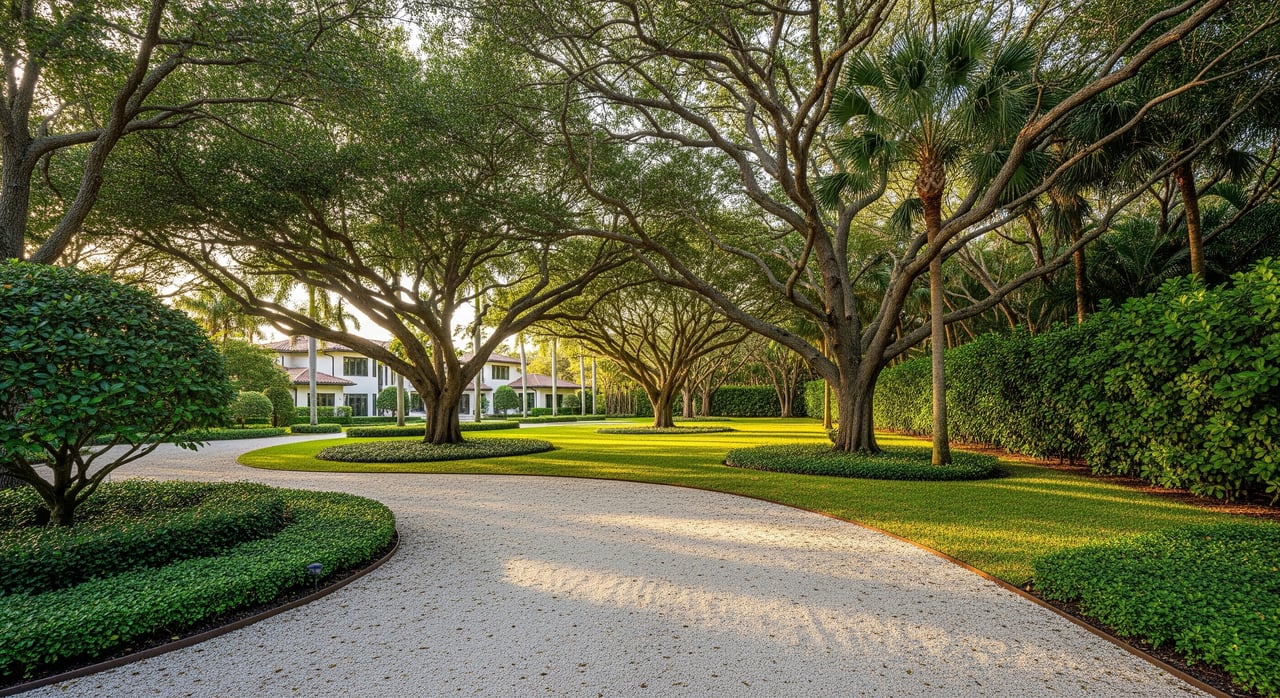
Mature trees are a hallmark of Pinecrest and can elevate daily living. Shade trees cool outdoor spaces and can reduce cooling demand in hot months. Layered landscaping adds privacy from streets and neighbors, which is a key driver of perceived estate value. Strong curb appeal from healthy, well-composed planting can help listings attract more interest and sell faster.
Constraints and maintenance
Trees have root zones that need respect. Planting or digging too close to large trunks can harm trees or lead to future damage to hardscapes and utilities. In storm season, poorly maintained canopy can pose risk, so regular pruning and species-appropriate care are essential. Some municipalities require permits for removing or altering specimen trees. Always check local rules before you trim or remove.
Species and microclimate in South Florida
Common canopy choices include live oak, mahogany, and gumbo limbo, while palms provide vertical accents. Select species for wind resistance, root behavior near structures, and leaf litter maintenance. Consider how much shade you want around the pool. In general, you want enough canopy to cool terraces and frame views, without shading the water so much that it becomes chilly or debris-heavy.
Landscape features that add value
- Mature specimen trees with layered understory and hedges.
- Professionally designed outdoor rooms: dining terraces, lawn courts, and pool terraces that align with main living areas.
- Privacy buffers that feel natural rather than fortress-like.
- Native or drought-adapted plantings to manage irrigation and upkeep.
Pool placement and orientation that work in Pinecrest
Pools are central to the Pinecrest lifestyle. On most estate lots, the sweet spot is a rear-yard location off the kitchen and family room for easy indoor-outdoor flow. You also want to minimize visibility from the street and maximize privacy from neighbors.
Where to put the pool
Before you commit to a design, verify setbacks and easements. Pools and decks must typically stay clear of utility easements and required yards. Keep a healthy distance from large tree root zones to avoid damage and excessive debris. Review how your grading will direct stormwater so you do not create runoff issues for neighbors. Place pool equipment where it meets setbacks and minimizes noise.
Sun, wind, and privacy
South or west exposure can offer abundant sun for daytime use, though west-facing areas may run hotter in late afternoons. If you prefer cooler water or shaded lounging, plan for partial shade from trees or a pergola. Prevailing breezes often come from the east or southeast, which can help ventilate terraces. Use plantings or screens to manage wind and sightlines, and ensure any structures meet code.
Safety, hurricane, and code
Florida Building Code and local rules govern wind loads for screens, cabanas, and outdoor structures. Large screen enclosures may require engineered designs and higher permitting costs. Safety measures like barrier fencing, self-closing gates, and alarms are commonly required and are also attractive to buyers and insurers.
Luxury pool features buyers expect
High-end buyers often look for integrated outdoor kitchens and lounges, with the primary suite or great room opening to the terrace. Sun shelves, spas, and clean-lined designs read as current. Energy-efficient systems, automation, and solar heating can cut running costs and become selling points.
What adds value vs. what hurts resale
Features that command premiums
- Larger lots with usable rear yards for pools and outdoor rooms.
- Healthy, mature canopy that provides privacy, shade, and curb appeal.
- Strong indoor-outdoor connectivity from main living spaces.
- Thoughtful pool siting that feels like an extension of the home.
- Underground utilities or visually appealing streetscapes.
- Proximity to parks, schools, and high-end amenities.
Red flags that can suppress pricing
- Extensive easements or constraints that force awkward pool or addition placement.
- Poor drainage or a history of flooding.
- Invasive or poorly maintained trees that raise storm risk.
- Pools placed close to neighbor views or without privacy screening.
- Visible mechanical equipment or retaining walls in main sightlines.
Cost vs. return in Pinecrest
Professional landscape design and specimen tree preservation often deliver strong returns because buyers respond emotionally to mature, livable grounds. Pool renovations add value when the design integrates with the house and neighborhood norms. Undergrounding utilities and refreshed entries can transform curb appeal, but verify comparable sales before investing heavily.
Buyer and seller checklist
- Confirm zoning, lot coverage, setbacks, and any overlay with the Village of Pinecrest.
- Order a certified survey to map lot lines, easements, and buildable envelope.
- Review Miami‑Dade Property Appraiser data for lot size and improvement history.
- Check FEMA flood maps, local floodplain status, and any freeboard requirements.
- Verify sanitary sewer vs. septic and any required future connections.
- Commission a certified arborist to evaluate mature trees, root zones, and permit needs.
- For pools: confirm location vs. setbacks and easements, equipment condition, enclosure engineering, and drainage plans.
- Identify overhead lines, transformer pads, and potential for undergrounding.
- Visit at different times to assess noise and privacy.
- Review permit history and any HOA or village architectural rules.
- Pull comparable sales for similar lot size, canopy, and pool orientation to benchmark pricing.
How we help you evaluate Pinecrest estate lots
On high-value properties, the margins are in the details. We synthesize parcel data, surveys, and local code so you understand exactly what you can build, add, or preserve. We coordinate arborists, pool designers, and permitting pros to stress-test concepts before you spend. For sellers, we advise on targeted upgrades, leverage premium marketing, and, where appropriate, use a private distribution strategy to reach qualified buyers discreetly.
If you are ready to compare Pinecrest lots or prep your estate for market, connect with our team for tailored guidance and access. Start the conversation with Olivier Brion.
FAQs
What lot size is considered an estate lot in Pinecrest?
- Estate lots commonly range from quarter-acre parcels up to half-acre, full-acre, and larger in some pockets; verify a specific property’s size via parcel data and survey.
How do Pinecrest setbacks and coverage affect my plans?
- Setbacks, lot coverage, impervious limits, and height rules define your buildable envelope; confirm details in the Village of Pinecrest code and with Miami‑Dade permitting before designing.
What should I know about pool placement on tree-heavy lots?
- Keep pools and decks outside required setbacks and away from major root zones to avoid damage and debris; plan drainage and locate equipment to minimize noise and meet code.
How does flood zone and elevation impact Pinecrest estates?
- Flood designations and base flood elevations can affect permits, insurance costs, and grading; check FEMA maps and local freeboard rules for each parcel before you proceed.
Which landscaping upgrades add the most value in Pinecrest?
- Mature specimen trees, layered privacy hedges, and well-designed outdoor rooms typically resonate with buyers; native or drought-adapted plantings reduce upkeep and support long-term appeal.
From the M Group journal archive. Market figures, events and property details reflect the original article.
Original publication ↗